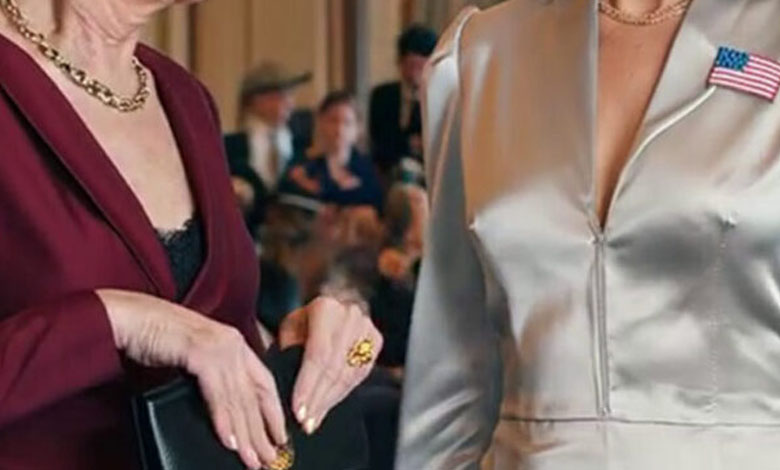
I asked to sit down, and my daughter-in-law snapped, “Stand, old woman,” loud enough for everyone to hear. Chairs scraped.
Eyes watched me.
I smiled, stayed calm…
And quietly dialed one number she never expected.
The charity gala was in its third hour when my knees started to give out. I’d been standing for most of the evening, circulating through the ballroom of the Fairmont Hotel in downtown Toronto, making polite conversation with my son’s colleagues and their wives, admiring the silent auction items, pretending my 71-year-old body wasn’t screaming at me to find a chair.
The event was important to my son, Victor. He was on the board of directors for this children’s hospital foundation. His wife, Natasha, had organized the entire gala—six months of planning, she’d told everyone who would listen.
And it was beautiful. I had to give her that. Crystal chandeliers, ice sculptures, a string quartet, tables draped in white linen with centerpieces of white roses. Everything perfect, everything controlled, everything Natasha.
I’d been invited—or rather, Victor had insisted I be invited over Natasha’s objections. I’d overheard them arguing about it two weeks ago when I’d arrived early to their Rosedale home to babysit my grandson.
“Your mother doesn’t fit the aesthetic, Victor.”
“She’s my mother. She’s coming.”
“Fine, but she needs to dress appropriately. No cheap department store dresses. I’ll send her something.”
She had sent me something: a designer dress in deep burgundy that probably cost more than my monthly rent. It fit perfectly because she’d somehow obtained my measurements. The dress was beautiful. I felt like an impostor wearing it, but I’d worn it because I’d learned over the past seven years that picking battles with Natasha was a losing strategy.
She always won. Not because she was right, but because she was relentless, and Victor was exhausted.
So I’d come to the gala, worn the dress, smiled, made small talk, represented the family appropriately, and now—three hours in—my knees were done.
I made my way toward the seating area, round tables set for the dinner portion of the evening, which wouldn’t start for another thirty minutes. Most tables were empty, reserved with place cards, but surely I could sit for a moment—just rest my legs.
I approached a table near the back and pulled out a chair.
“What are you doing?”
Natasha’s voice cut through the ambient noise of conversation and music. Sharp. Authoritative.
I turned. She stood five feet away in a floor-length silver gown that probably cost more than my car. Her dark hair was swept up in an intricate style. Diamond earrings—ones Victor had given her for their fifth anniversary—caught the light.
She looked beautiful. She always did. That was part of her power.
“I was just going to sit for a moment,” I said quietly. “My knees—”
“The seating is assigned,” she said. “Dinner hasn’t started. Guests are meant to be circulating.”
“I understand. I just need to rest for a minute, then—”
“Then rest in the lobby. Not in the ballroom. This is a fundraiser, not a nursing home.”
A few people nearby had stopped talking. I could feel it—attention turning, curiosity sharpening. I felt my face flush.
“Natasha,” I said, careful, “I’m not trying to cause a problem. I just need to sit down for a few minutes.”
Her eyes went cold. I’d seen that expression dozens of times over seven years. The look that said she was about to assert dominance.
She stepped closer and spoke loudly enough that everyone within ten feet could hear clearly.
“Stand, old woman. You’re embarrassing yourself. And me.”
The words hung in the air like ice.
Chairs scraped as people turned fully toward us. Conversation stopped. The string quartet continued playing, oblivious, but everyone in our section of the ballroom was now watching.
I stood very still. My knees throbbed. My heart pounded. My face burned with humiliation.
Natasha crossed her arms and waited—daring me to argue, daring me to make a scene that she could then point to as evidence that I was difficult, dramatic, inappropriate. I’d seen her do this before, to Victor’s sister, to the housekeeper, to anyone who challenged her authority in even the smallest way.
But something was different this time.
Maybe it was the public nature of it. Maybe it was the phrase old woman—so deliberately cruel, so meant to diminish. Maybe it was the seven years of accumulated small humiliations finally reaching critical mass.
Or maybe it was just that my knees really, really hurt.
I smiled.
Not a forced smile. A genuine, calm smile.
“You’re absolutely right, Natasha,” I said clearly. “This is your event, your rules.”
She looked slightly suspicious, like she sensed a trap but couldn’t identify it.
I reached into my small evening bag—also provided by Natasha, also expensive—and pulled out my phone.
“What are you doing?” she asked.
“Just making a quick call,” I said. “Won’t take a moment.”
I stepped away from the table, still standing, still smiling, and dialed a number I’d memorized forty-nine years ago.
He answered on the second ring.
“Arthur Bowmont.”
“Hello, Arthur. It’s Dorothy.”
A pause, and then warmth flooded his voice. “Dorothy. Good heavens. I haven’t heard from you in what—three years? Four, since Richard’s funeral. Of course… I’m so sorry. How are you?”
“I’m well, thank you,” I said. “I’m actually calling because I’m at a charity gala at the Fairmont—the Children’s Hospital Foundation event.”
“Oh, I’m on that board,” he said. “Should be there, but I had a conflict tonight.”
“Yes, I know you’re on the board,” I said. “That’s why I’m calling.”
Behind me, I could feel Natasha’s attention sharpening. Other people were still watching, confused by this elderly woman making a phone call in the middle of a confrontation.
“Arthur, I’m here with my son, Victor. Victor Chen—he’s also on the board.”
“Victor Chen, yes,” Arthur said. “Excellent fellow. Very dedicated. This is his wife’s event, isn’t it? Natasha?”
“Yes,” I said. “She’s done a beautiful job. Very impressive.”
“I’m glad to hear it,” Arthur said. “But Dorothy… forgive me. Why are you calling?”
“I need to report a medical concern.”
His tone shifted immediately. “Are you all right? Do you need an ambulance?”
“No, no, nothing like that,” I said gently. “But I’m seventy-one years old, Arthur. I have osteoarthritis in both knees. I’ve been standing for three hours. I asked to sit down, and the event organizer told me to stand and called me an old woman in front of approximately thirty guests.”
Silence.
I continued, keeping my voice pleasant and factual. “Now, I know this is her event and I respect that, but as a foundation board member yourself, I thought you should know that accessibility accommodations are being actively denied to elderly guests. I’m sure it’s an oversight, but it does seem like something the board would want to address. Liability concerns and all that.”
More silence.
“Then she said, ‘What? Stand, old woman.’ Those were her exact words, quite loudly. Several witnesses.”
Arthur’s voice, when it came back, was steel. “Dorothy, sit down right now. Wherever you are—sit down.”
“Are you sure?” I asked, as if I didn’t know exactly what was about to happen. “I was told—”
“I don’t care what you were told,” he snapped. “As a board member, I’m telling you to sit down immediately. That’s a direct instruction from someone with actual authority over this event.”
I pulled out the chair I’d originally approached and sat down slowly, carefully. My knees sang with relief.
“Thank you, Arthur.”
“Is Natasha nearby?” he asked.
“Yes,” I said. “About five feet away.”
“Put me on speaker.”
I switched to speaker mode and held the phone up.
Arthur’s voice filled the immediate area—authoritative, sharp, the voice of a man who’d been a corporate litigation attorney for forty-five years.
“This is Arthur Bowmont. I’m on the board of directors for the Children’s Hospital Foundation. To whom am I speaking?”
Natasha’s face had gone pale. “This is Natasha Chen,” she said. “I’m the event organizer.”
“Mrs. Chen,” Arthur said, “I’ve just been informed that you denied accessibility accommodations to an elderly guest and used ageist language in front of multiple witnesses. Is that accurate?”
“That’s not—” she started, then pivoted. “She was trying to sit at a reserved table.”
“Was she informed that seating assistance was available for guests with mobility issues?” Arthur asked.
“Well, no, but—”
“Was she offered a chair in a designated area if the assigned seating wasn’t yet available?”
“The event hasn’t—”
“Mrs. Chen,” Arthur cut in, “yes or no. Was a seventy-one-year-old woman with osteoarthritis offered any accommodation when she requested to sit down?”
Silence.
“No,” Natasha finally said, her voice barely above a whisper.
“And did you in fact tell her to ‘stand, old woman’?”
“It was taken out of context.”
“Context is irrelevant when it comes to discriminatory language at a foundation event,” Arthur said. “Mrs. Chen, you’ve created a significant liability issue. I’ll be contacting the board chair first thing Monday morning.”
He paused, and his voice turned colder.
“In the meantime, you will personally ensure that Mrs.—Dorothy, I’m sorry, what’s your last name?”
“Chen,” I said. “I’m Victor’s mother.”
A beat.
“Victor’s mother,” Arthur repeated, as if tasting the words for their weight. “I see.”
Then, back to Natasha: “Mrs. Chen, you will personally ensure that Mrs. Dorothy Chen has appropriate seating, refreshments, and any other accommodation she requires for the remainder of the evening. Is that clear?”
“Yes,” Natasha whispered.
“Dorothy,” Arthur said, softer now, “please don’t hesitate to call me again if there are any further issues. I’ll be following up with you next week.”
“Thank you, Arthur,” I said. “Thank you for bringing this to my attention.”
“Enjoy the rest of your evening,” he said, and then, to Natasha again, “Mrs. Chen, see that she does.”
I ended the call, placed my phone back in my bag, and looked up at Natasha.
She stood frozen, her face cycling through expressions—shock, rage, humiliation, calculation. Around us, people were trying very hard to pretend they hadn’t just witnessed what they’d clearly witnessed.
“I think I’ll sit here until dinner starts,” I said pleasantly. “If that’s all right.”
Natasha said nothing. She just turned and walked away, her silver gown swishing, her heels clicking sharply against the floor.
Before we keep going, I just want to say thank you for being here. If you’re enjoying the story so far, consider subscribing and tell me in the comments where you’re watching from. I truly read them, and your support means more than you know.
All right, let’s continue.
A woman at the next table leaned over. “That was magnificent.”
“Thank you,” I said.
“I’m Caroline,” she said. “Caroline Mitchell. My husband’s on the board, too.”
“Dorothy Chen,” I said. “Pleased to meet you.”
“Your son is Victor, then?”
“Yes.”
She smiled. “I’ve always liked Victor. He’s genuine. Unlike—” She trailed off diplomatically.
Unlike his wife, I didn’t say.
“You didn’t have to,” Caroline said quietly, as if she’d heard the thought anyway.
A waiter appeared at my elbow. “Mrs. Chen. Mrs. Natasha Chen asked me to bring you water, tea, or coffee. Whatever you’d like.”
“Water would be lovely,” I said. “Thank you.”
He returned moments later with water, a small plate of appetizers, and a cushion for my chair.
“Mrs. Chen also wanted you to have this cushion for your comfort,” he said.
“How thoughtful,” I murmured.
Caroline caught my eye. We both smiled.
Victor found me twenty minutes later. He looked stressed, which was his default state lately.
“Mom,” he said, lowering his voice, “what happened?”
“I asked to sit down,” I said. “My knees were hurting. And Natasha said no, rather forcefully.”
He blinked. “She said you were making a scene.”
“Did I make a scene, Victor?” I asked. “You can ask anyone here.”
He looked around. Several people met his eyes, then looked away quickly.
“Mom… Natasha’s very upset.”
“I imagine she is.”
“She says you called some board member and got her in trouble.”
“I called Arthur Bowmont,” I said. “An old friend of your father’s. I reported an accessibility issue at a foundation event, which I had every right to do.”
“You could have just waited until dinner.”
“I waited three hours, Victor,” I said. “My seventy-one-year-old knees couldn’t wait any longer.”
“She’s saying you’re trying to sabotage her.”
I set down my water glass carefully. “Victor, your wife told me to ‘stand, old woman’ in front of thirty people. She deliberately humiliated me.”
“And when I simply called someone with actual authority over this event,” I added, “I’m the one sabotaging?”
“She didn’t mean it like that,” Victor said automatically.
“How did she mean it?” I asked.
He didn’t answer.
“Victor,” I said, “look at me.”
He did, reluctantly.
“I’m seventy-one years old,” I said. “I have arthritis. I asked to sit down. That’s not unreasonable. That’s not dramatic. That’s a basic human need.”
“I know,” he said.
“But there is no ‘but,’” I said. “There’s no context that makes what she said acceptable. And if you can’t see that, then we have a much bigger problem than one difficult evening.”
“Mom,” he said, voice tight, “please don’t make this a thing.”
“I’m not making it anything,” I said. “I’m sitting in a chair. That’s all I’ve ever wanted to do.”
He looked torn, exhausted, trapped between two impossible positions.
Then Natasha appeared beside him. Her mask was back in place—perfectly composed, perfectly polite.
“Dorothy,” she said, her voice warm enough that anyone overhearing would think we were the best of friends. “I’m so sorry about the misunderstanding earlier. Of course you should sit. I should have offered immediately. Please forgive me.”
It was masterful: a public apology that positioned her as gracious while simultaneously making me look petty if I didn’t accept immediately.
“Of course,” I said smoothly. “Thank you, Natasha.”
She smiled and placed a hand on Victor’s arm. “Dinner will start in ten minutes. We should find our table.”
They walked away together.
Victor didn’t look back.
I sat there watching them go. Caroline leaned over again.