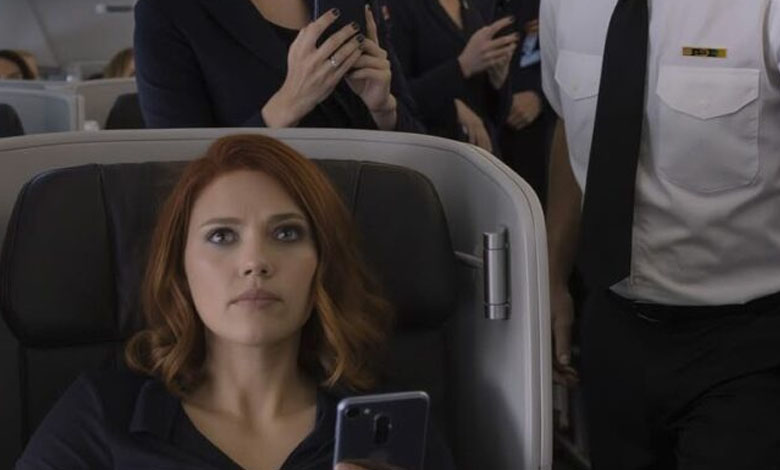
The cabin held its breath before anyone did. A seat‑belt chime pinged—thin, polite, useless.
“Control your child, or I’ll have security remove you both from this aircraft immediately.”
The sharp crack of palm to cheek echoed through the first‑class cabin. Dozens of phones rose in the same second, little glass suns blinking to life; the scent of jet fuel and citrus disinfectant hung under the whisper of the air nozzles; a metal teaspoon rattled in someone’s coffee like a tiny alarm. Flight attendant Sandra Mitchell’s hand had just connected with Kesha Thompson’s face as Kesha cradled her six‑month‑old daughter, Zoe. The baby’s cries spiked from the sudden blow. Nearby passengers lifted their phones, recording what some assumed was justified discipline of an unruly traveler.
“Finally, someone with backbone,” an elderly woman in pearls whispered.
Kesha’s cheek stung, but her eyes stayed steady. She adjusted baby Zoe’s blanket with trembling hands. Her boarding pass lay visible in her lap: Mrs. K. Thompson, with a special gold status code Mitchell had ignored. The cabin fell silent except for Zoe’s soft whimpering and the click of recording phones.
“Have you ever been judged as a bad parent in public before anyone asks if you need help?”
Mitchell straightened her navy uniform, silver wings catching the cabin lights as she played to her audience. The slap had energized her. A chance to demonstrate authority for premium passengers.
“Ladies and gentlemen, I apologize for the disruption,” Mitchell announced loud enough for the entire cabin. “Some people simply don’t understand appropriate travel etiquette.”
Murmurs of approval rippled. A businessman in an expensive suit nodded toward Kesha. “Thank God someone’s maintaining standards.”
Kesha remained silent, gently bouncing Zoe to calm her cries. The baby’s tiny fist wrapped around her mother’s finger—an image that should have softened hearts but only seemed to irritate the onlookers.
Mitchell lifted her radio, performing confidence. “Captain Williams, we have a code yellow in first class—disruptive passenger with an infant, refusing to comply with crew instructions.”
The radio crackled. “Copy that, Sandra. How do you want to proceed?”
“I’m recommending immediate removal before departure. She’s already delayed us eight minutes.”
Kesha glanced at her phone. The screen showed fourteen minutes until departure. Below that, a text notification: Corporate legal merger announcement scheduled for 2 p.m. ET. All systems ready. She tucked the phone away before Mitchell could see.
“Excuse me,” Kesha said quietly, barely above the cabin noise. “My ticket shows seat 2A. I paid for first‑class service, and I’d appreciate—”
Mitchell cut her off with a harsh laugh. “Ma’am, I don’t care what story got you that ticket. People sometimes try to upgrade improperly. I know every trick.”
Across the aisle, a college‑aged passenger held up her phone, livestreaming. “Y’all, this is unreal. A flight attendant just hit a mom with a baby. I can’t even.” The viewer count climbed. Comments scrolled fast—many judgmental, a few concerned.
Mitchell noticed the filming and leaned into her role. “If you can’t manage your child appropriately, I have the right to request your removal. Airline policy is clear about disruptive passengers.”
Kesha opened her carry‑on to retrieve formula. A flash of platinum caught the light—an airline executive card tucked between diapers and bottles. She slid it away quickly. The design looked nothing like a standard frequent flier card.
Her phone buzzed again. The caller ID was visible to those nearby: Skylink Airways Executive Office. She declined the call.
Mitchell’s eyes narrowed. “Who exactly do you think you’re calling? No one’s overriding federal aviation rules from the ground.”
The insult landed like another slap. Several passengers chuckled.
The businessman spoke up. “Miss, you’re holding up 180 passengers with this drama. Some of us have important business to attend to.”
“Ten minutes until mandatory departure,” came Captain Williams’s voice over the intercom. “Flight crew, prepare for final boarding completion.”
Kesha checked her watch—a simple black timepiece, unflashy, with an engraving on the back: To my brilliant wife, M.T.
Mitchell built to a crescendo. “Ma’am, I’m going to ask one last time: gather your belongings and deplane voluntarily. If you refuse, federal air marshals will escort you.”
The livestream hit eight thousand viewers. Comments flooded faster than the filmer could read. Buried among the harsh takes were a few different voices: Something’s not right here. Why is the mom so calm? The attendant seems way too aggressive.
A business passenger near the window opened his laptop and began typing on an aviation industry forum. His post title: Witnessing discrimination in real time, Skylink Flight 847. Within minutes, insiders were following.
Mitchell keyed her radio again. “Captain, passenger is non‑compliant. Requesting immediate ground security.”
“Copy. Ground crew standing by.”
Kesha spoke a second time, steady despite the humiliation. “Ma’am, I understand you believe you’re following protocol, but I strongly suggest you verify my passenger status before taking an irreversible action.”
“Irreversible?” Mitchell’s voice spiked. “The only thing irreversible is your behavior.”
The elderly woman in pearls leaned forward. “Young lady, in my day, parents knew how to travel with children. This display is shameful.”
More phones rose. Facebook Live. Instagram stories. The #flight drama tag began to trend locally.
Kesha remained composed—no raised voice, no arguing, no demands. Her calm felt unsettling, like someone who knew something the others didn’t. Baby Zoe quieted, responding to her mother’s steady heartbeat. The infant’s dark eyes scanned the cabin with unguarded curiosity.
“Ten minutes,” Mitchell announced. T–10. Kesha thinks: Don’t give them the story they want; give them the truth they can’t edit. “Security will be here in ten.”
Kesha kissed Zoe’s forehead and whispered something too soft for the recordings to catch. Her eyes carried a knowledge that made a few observers uneasy. Something was about to change.
Captain Derek Williams strode into first class, gold stripes catching the overhead lights. Twenty‑two years of commercial aviation had taught him to project absolute authority during passenger conflicts.
“What’s the situation, Sandra?” His voice carried the weight of command.
“Sir, this passenger has been disruptive since boarding—crying infant, refusing instructions, argumentative about deplaning.”
Williams studied Kesha with practiced assessment—young mother, designer diaper bag, first‑class seat—and unconsciously aligned with Mitchell’s narrative.
“Ma’am, I’m Captain Williams. Federal regulations require compliance with crew instructions.”
The livestream exploded past fifteen thousand viewers. “The captain’s here,” the college student whispered to her audience. “This is getting serious.” Comments poured in: She’s about to get arrested. Captain looks mad. Bye, lady—enjoy the no‑fly list.
Kesha adjusted Zoe and checked her phone discreetly. Eight minutes until departure deadline.
“Eight minutes until what?” Williams demanded. “Whatever schedule you think you’re keeping doesn’t override safety protocols.”
Two plain‑clothes federal air marshals emerged from the galley, identifiable to trained eyes. The presence escalated the situation from service issue to potential security threat.
Air Marshal Rodriguez approached cautiously, hand near his concealed holster. “Captain, what’s the nature of the disturbance?”
“Passenger non‑compliance,” Williams replied. “Refusal to deplane after crew assessment.”
The business forum poster paused to snap photos. His post was gaining traction—hundreds of comments within minutes.
Mitchell lifted the intercom. “Ladies and gentlemen, we apologize for the delay caused by an uncooperative passenger. We expect to resolve this shortly.”
Frustration rose. “Just take her off.” “I have a connection.” “This is ridiculous.”
The livestream hit twenty‑five thousand. Local news alerts pinged across Nashville: Viral incident unfolding on Skylink flight.
Kesha remained seated. Zoe was calm now, curious. Her composure was almost eerie—as if waiting for a preset moment.
Air Marshal Johnson flanked the other side. “Ma’am, please gather your belongings and come with us voluntarily.”
“I need exactly five more minutes,” Kesha said quietly. T–5. Kesha thinks: Count the beats, not the faces. We’ve trained for storms bigger than this.
“You need zero,” Williams snapped. “This is a federal aircraft under my command, and you’re creating a safety hazard.”
The woman in pearls lifted her chin, loud for the cameras. “Captain, I’ve been flying for sixty years. This kind of entitled behavior is exactly what’s wrong with air travel today.”
The narrative had been set: disruptive mother versus professional crew. But the business blogger noted details that didn’t fit—no signs of actual distress, only control. He typed furiously: Passenger is too calm. Something else is happening.
Kesha’s phone buzzed insistently. Caller ID flashed again: Skylink Corporate Emergency Line. She declined.
Mitchell’s eyes narrowed. “Who keeps calling you? No one can override federal law from the ground.”
Approving chuckles bubbled nearby. The businessman raised his phone higher to capture Mitchell’s “authority.”
“Six minutes,” Williams announced, checking his watch. T–6. Captain thinks: Keep the timeline tight. Don’t lose the cabin. Don’t lose the narrative. “Ground security is boarding now.” Through the windows, airport security vehicles formed up, emergency lights pulsing. The situation had escalated beyond simple removal. The livestream reached thirty‑two thousand. Screenshots spread across X, Instagram, and Facebook from multiple angles.
Ground security boarded through the forward galley—radios, cameras, all the gear for a forcible removal.
“Ma’am,” the lead officer said, “by order of the captain and federal air marshals, you’re being removed from this aircraft. Please comply.”
Kesha looked around the cabin—recording phones, hostile faces, overwhelming authority. Zoe gurgled softly, reaching toward a shiny badge.
“Four minutes,” Kesha said quietly. T–4. Kesha thinks: Almost there, Zoe. Almost there.
“You have zero,” Williams repeated. “Officers, escort this passenger and child from the aircraft immediately.”
Security moved closer. Phones leaned in, eager for the shot. The livestream hit thirty‑eight thousand.
Something in Kesha’s eyes made the sharpest observers pause. She wasn’t panicking or pleading. She was waiting.
Air Marshal Rodriguez hesitated. “Ma’am, if you have legitimate documentation, now would be the time—”
“Rodriguez,” Williams cut him off, “we don’t negotiate with disruptive passengers. Remove her now.”
Mitchell stepped forward. “This is why we have protocols. Some people try to manipulate situations with social‑media theatrics.”
Applause broke out for Mitchell’s firm stance. Comments praised the crew’s “professionalism.”
Kesha kissed Zoe’s forehead and whispered something inaudible. Then she lifted her phone with deliberate calm.
“Three minutes,” she said, and pressed a single contact. T–3. Chen thinks: My chat is blowing up—post now or hold? Hold. Let the moment finish. She put it on speaker.
“Hi, honey,” she said softly. “I’m having trouble on your airline.”
The voice that answered froze Captain Williams where he stood. “Which aircraft, sweetheart? I’ll handle this personally.”
He knew that voice. Every Skylink captain did. It belonged to the man who signed their paychecks.
“Flight 847, first class,” Kesha said evenly. “The crew is being… creative with customer service.”
The speaker crackled with contained fury. “I’m Marcus Thompson, chief executive officer of Skylink Airways. Everyone on that aircraft will step back from my wife immediately.”
Silence fell, broken only by Zoe’s soft coo and the ground vehicles’ distant hum. Mitchell went pale. Williams staggered a half‑step back.
The livestream exploded past forty‑five thousand. Comments went wild: Plot twist. She’s the CEO’s wife. Career‑ending moment.
Security stepped away as if the air around Kesha had changed temperature.
“Captain Williams. Ms. Mitchell,” Marcus said, voice like ice, “I’ll be reviewing this personally. And I do mean personally.”
Kesha stayed calm, rocking Zoe as 180 passengers and crew stared.
“Two minutes until departure, honey,” she said lightly. T–2. Captain thinks: This is slipping. Authority is a rope; you feel it go before you see it go.
“Cancel the departure,” Marcus replied. “We have bigger problems.”
The woman they had tried to remove belonged to the family that ran the airline, and the entire cabin had watched it live.
“Are you and Zoe physically safe?” Marcus asked.
“We’re fine now,” Kesha answered. “Though Ms. Mitchell did strike me while I was holding the baby.”
The admission landed like lightning. Passengers realized their phones had captured what could be a serious assault—on the CEO’s wife.
Williams found his voice, brittle. “Mr. Thompson, sir—there’s been a misunderstanding.”
“A misunderstanding?” Marcus cut in. “Captain, I’m watching the live stream. Tens of thousands just witnessed my wife being hit by your crew.”
The stream surged to forty‑seven thousand. The college student could barely keep her phone steady.
Mitchell pressed against the galley wall, disbelief and fear chasing each other across her face. “This has to be a joke. She’s just—just a passenger—”
“Ms. Mitchell,” Marcus said, deadly calm, “you just referred to my wife as ‘just a passenger’ after striking her. I’m recording this conversation for legal.”
The business blogger’s post blew past two thousand shares among industry insiders. New headline: Breaking—Skylink crew strikes CEO’s wife on live stream.
Air Marshal Rodriguez raised his hands slightly, backing away. “Mrs. Thompson, we responded to crew reports. We had no knowledge of your identity.”
“Of course you didn’t,” Kesha said gently, adjusting Zoe’s blanket. “That was rather the point—how passengers are treated when assumptions replace verification.”
Williams tried a pivot. “Sir, if we could handle this privately—”
“Captain,” Marcus said, a harsh laugh, “the time for private ended when your crew made this public.”
The woman in pearls sank into her seat. Her approving comments about “standards” had been captured in multiple live streams.
Kesha took out the platinum card she had hidden earlier. Not a frequent flier card—an ownership verification: Mrs. Marcus Thompson — First Family, embossed in gold. She held it up for the nearest camera.
Gasps. Several passengers lowered their phones, realizing their commentary would be tied to their profiles.
“Honey,” Kesha said into the phone, “should I mention the merger announcement?”
“Not yet,” Marcus replied coolly. “Let’s see how they handle the next five minutes.”
Mitchell grasped for footing. “Impossible. I’ve worked for Skylink eight years. I would know the CEO’s family.”
“Would you?” Kesha asked quietly. “Have you ever seen photos? Does the company share our personal information with crew?”
The answer was obvious: privacy protocols exist for executive families.
Williams pulled his radio with shaking hands. “Ground, this is Flight 847—we’re delaying departure indefinitely. We need corporate intervention.”
Ground sounded confused. “Flight 847, please clarify. We show security response in progress.”
Marcus took the channel. “Ground, Marcus Thompson. Cancel all security responses to 847. I’m handling this personally.”
“Copy, Mr. Thompson. Units standing down.”
The stream hit fifty‑two thousand. Local news vans raced toward the airport. #SkylinkScandal trended nationwide.
Kesha tapped to open a video call. The screen showed a boardroom full of executives watching the cabin in real time.
“Ladies and gentlemen,” she told the cabin, “meet Skylink’s executive leadership team.”
The camera panned across corporate officers, legal counsel, and a federal aviation liaison—faces set in shock, anger, or crisis mode. Marcus appeared in a New York suit, eyes burning with controlled resolve.
“Ms. Mitchell,” he said to the cabin, voice carrying, “you struck my wife in front of more than fifty‑four thousand witnesses. Federal law treats assault aboard an aircraft as a serious matter.”