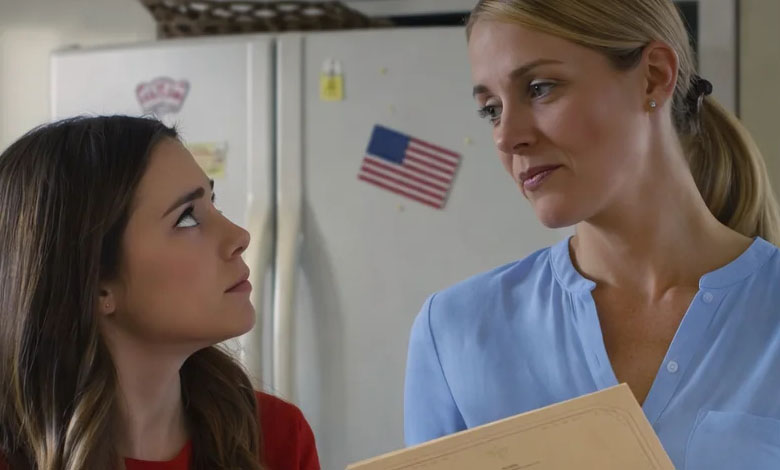
My name is Claire, and being the oldest daughter in my family has always felt like standing in a doorway with my arms stretched wide, holding everyone back from spilling into each other.
I learned early how to listen for the tiny shifts in a room. A laugh that went a little too sharp. A silence that grew teeth. I learned how to refill drinks before anyone asked, how to change the subject before a comment landed, how to make the group text feel like a warm blanket even when it was really a net.
If you grew up in the kind of American household that runs on soccer Saturdays and church potlucks and holiday meals scheduled three months in advance, you know the role. Oldest means you become the soft place people land. Oldest means you are expected to be steady, to be pleasant, to be the one who remembers everyone else’s needs first.
Tessa, the middle sister, never had to do that. Tessa was the spark. She could walk into any room and somehow the air rearranged itself around her. People turned their heads. People made space. Even her sighs felt like performances.
Rachel, the youngest, was our family’s permanent little darling. Even as an adult she carried that same weightless immunity. If she snapped, people called it stress. If she forgot something, people called it charming. If she hurt feelings, it was somehow always an accident everyone else had to work around.
And me.
I was the one who cleaned up. I was the one who made sure apologies happened. I was the one who drove back across town because someone forgot a casserole dish. I was the one who smoothed the tablecloth of our family until it looked like nothing had ever wrinkled it in the first place.
When I became a mom, I promised myself I would break that pattern.
I told myself my child would not inherit a life where love felt like something you had to earn by being convenient.
I adopted Maya when she was three years old.
The first time I saw her, she sat on a little plastic chair in a room that smelled faintly of disinfectant and crayons. Her hair was pulled into two tiny puffs and her hands were folded in her lap like she’d been taught to take up as little space as possible. She didn’t bounce or chatter like a toddler on television. She watched. Carefully. Not suspicious, exactly. More like… trained. Like a child who had learned that safety could vanish without warning.
When the social worker asked if she wanted to say hello, Maya looked at me with those wide, serious brown eyes and didn’t move. The silence stretched. I smiled anyway, soft and hopeful, and I said, “Hi, Maya. I’m Claire.”
She blinked once. Then twice.
And the smallest little sound came out of her, not quite a word. A test.
After a while, I reached for a box of animal crackers on the table. I slid it toward her, slow. No pressure. The way you offer food to a shy cat and pretend you don’t care if it takes it or not.
Maya stared at the box. Then she reached out with two careful fingers, pinched one cracker, and brought it to her mouth like she was waiting for someone to stop her.
No one stopped her.
That’s how it began. Not with fireworks. With tiny permissions.
The first time she called me “Mom” came later, in the back seat of my car.
We’d just left preschool. She was buckled into a booster seat that still smelled new, the straps stiff, the fabric unsoftened. She’d been quiet the whole drive, staring out at the world passing by: trees, stop signs, neighborhoods full of other families doing ordinary things.
Then, at a red light, she said it. Barely above a whisper.
“Mom?”
The way she said it made it sound like a question and a dare all at once, like she was trying the word on her tongue to see if it would crack.
My heart did something so sharp and bright it almost hurt. I kept my eyes on the road because I was afraid if she saw my face, she’d take it back.
“Yes, baby?” My voice came out steadier than I felt.
She didn’t say anything else. Just sat back, as if she’d slipped a note under a door and now had to wait for the answer.
When I dropped her off the next morning, I walked her to the classroom, kissed her forehead, and left like a normal parent. Then I got into my car, shut the door, and cried in the parking lot until my cheeks ached and my throat burned. I cried because I loved her. I cried because she was brave. I cried because I was terrified I’d fail her.
That day I made a promise that lived in my bones.
She would never feel unwanted in my family. Not ever again.
I meant it with my whole chest, the way you mean something you’re willing to lose comfort for.
What I didn’t understand then was how easily people can say they love a child and still treat her like she’s optional.
It wasn’t loud at first. It was always small enough that it could be denied.
It was the way my mom introduced Maya to her friends at church, smiling too brightly and saying, “This is Claire’s girl,” like Maya was a sweet project I’d taken on, not her granddaughter. The words were friendly. The distance in them was not.
It was the way Tessa referred to her as “your daughter” instead of “my niece.” Not once or twice. Over and over, like it mattered to keep the line drawn.
It was the way Maya tried to help in the kitchen at Thanksgiving, standing near the counter with a dish towel in her hands, waiting for someone to give her a job. Someone would glance her way and say, “We’re fine,” without even looking up. Two minutes later Rachel’s kids would burst in, hollering about whipped cream, and suddenly everyone had time and attention and laughter.
Maya noticed all of it.
That’s what people miss about children who’ve already been through loss. Not every child becomes loud or wild. Some become experts at reading rooms. Some become quiet little professionals at earning love.
Maya didn’t demand. She offered.
She didn’t assume she belonged. She waited for permission to exist.
Sometimes I’d catch her studying my family the way other kids studied cartoons. Watching who got touched on the shoulder, who got asked questions, whose jokes were rewarded. If there was an instruction manual for being wanted, Maya was trying to memorize it.
When she was six, she told my dad she wanted to be an artist.
We were in my parents’ living room. The afternoon sun came through the blinds in bright stripes across the carpet. Maya sat cross-legged on the floor with a sketchpad in her lap, drawing quietly while the adults talked.
My dad looked down at her and asked, casual, “Whatcha making?”
She held it up shyly. A horse with a flowing mane. A little crooked, yes, but full of care. Her small fingers had smudged pencil along the edge, a gray haze where she’d rested her hand.
“I want to be an artist,” she said. Her voice was hopeful but careful, like she’d already been taught not to hope too loudly.
My dad smiled in the way people smile when they think they’re being kind, and he said, “That’s nice, sweetheart. But you’ll need something more practical than that.”
Maya’s eyes flicked to mine for half a second. Then she nodded, polite, and lowered the sketchpad back to her lap.
She didn’t argue. She just swallowed the idea.
When she was eight, she drew a picture of our family, just the three of us: me, my husband Ethan, and her. She used bright colors, pressing hard enough to break the crayon tips. The three of us stood holding hands with giant smiles. She’d even drawn little freckles on Ethan’s cheeks and my favorite earrings. She had made us beautiful.
On Christmas Eve she handed it to my mom with both hands.
The paper was warm from Maya’s palms. Glitter glue along the top spelled “Merry Christmas” in shaky letters. The drawing smelled like crayons and candy canes.
My mom took it and said, “Thank you,” and set it on the counter near the fruit bowl like it was a receipt.
No hug. No gasp. No, “Oh my goodness, look at us!” No taping it to the fridge where all the other grandchildren’s art lived under magnets shaped like apples and snowmen.
Later that night, when the kitchen was full of dishwater sounds and the scrape of plates, Maya crept beside me and asked quietly, “Why didn’t Grandma put it up?”
I stood there with soap on my hands, staring at the fridge where Rachel’s kids’ scribbles were displayed like museum pieces. I opened my mouth to answer and realized every possible explanation tasted like betrayal.
So I said something weak. Something like, “Maybe she just forgot.”
Maya nodded, accepting the lie like she accepted so many things. But her eyes looked older than eight.